
An unsolved question in sleep science
Or, a display of my ignorance of sleep science
After reading Why We Sleep by Matthew Walker, and Alexey Guzey’s essay Matthew Walker’s “Why We Sleep” Is Riddled with Scientific and Factual Errors, and feeling drawn to join in the fray with an essay titled, gloriously, Alexey Guzey’s ‘Matthew Walker’s “Why We Sleep” Is Riddled with Scientific and Factual Errors’ Is Riddled with Scientific and Factual Errors (except that it’s not), one debate still plagues the dinner table:
Is it unhealthy to get too much sleep? Presumably, too much would be 9hrs+, since many sources recommend 7–9hrs sleep for optimal health.
There are graphs showing correlation between long sleep and poor health:
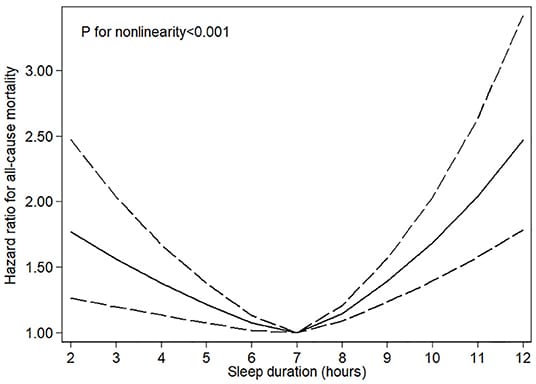
And this meta-analysis concludes “Both short and long duration of sleep are significant predictors of death in prospective population studies.”
(“Sleep duration was assessed by questionnaire and outcome through death certification.”)
But this could easily be confounding factors (sick people need more sleep).
I have never found an interventional sleep study of this topic, or one that finds causation.
Is this because:
- You can’t just tell healthy people to sleep for ten hours a night? (Or, you can, but they won’t actually do it)?
- But maybe you could tell them to lie still and try to sleep, if you paid them well enough?
- It’s an ethics board thing: nobody can do this study because if it is causation and not correlation, you would be hurting people by requiring them to oversleep.
If it’s the second, are there interventional studies of long sleep duration and all cause mortality in rats/mice? And would these generalize to humans?
I’d appreciate comments/emails from anyone who has found good research on this topic.